Compare Hospital Beds, Motorized ICU Beds & Electro-Hydraulic OT Tables
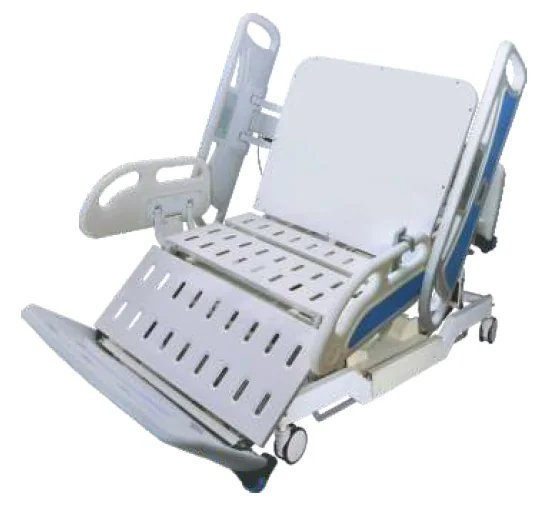
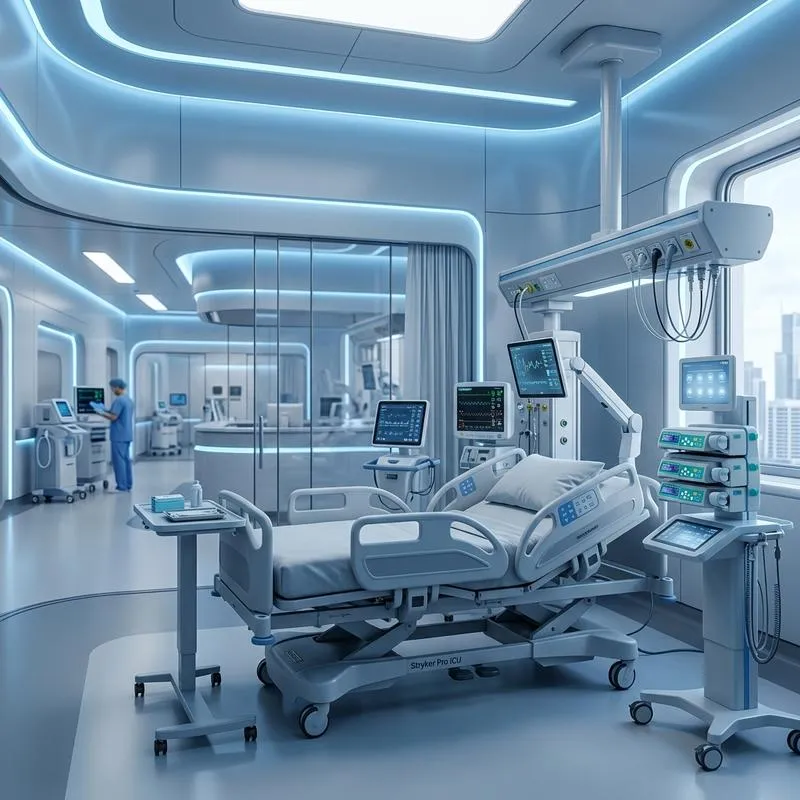
Intensive Care Unit (ICU) beds represent the primary physical interface between critically ill patients, life-sustaining biomedical technology, and clinical nursing teams. Unlike standard ward beds that serve primarily for post-operative recovery or ambulatory rest, an advanced ICU bed is an active medical device. It must facilitate instantaneous resuscitation maneuvers, provide precision hemodynamic positioning, support continuous mechanical ventilation ergonomics, and prevent debilitating hospital-acquired complications like pressure injuries and ventilator-associated pneumonia (VAP).
For hospital administrators, biomedical procurement committees, and intensive care directors across India, evaluating ICU bed specifications requires balancing rigorous mechanical engineering with clinical functionality and total cost of ownership (TCO). This comprehensive 2026 procurement benchmark outlines technical standards, motor actuator architectures, safety compliance norms, and live wholesale pricing tiers across the Indian medical equipment market.
1. The Engineering Architecture of Critical Care Beds: What Separates ICU from Ward Beds
The structural integrity of an ICU bed dictates its clinical reliability under high-stress emergency conditions. When evaluating capital hospital furniture, biomedical engineers must verify four core engineering parameters:
- Actuator & Control Motor Architecture: The heart of a motorized ICU bed is its electric linear actuator system. Tier-1 hospital beds utilize medical-grade actuators certified to IEC 60601-1 and IEC 60601-2-52, primarily engineered by Linak (Denmark) or TiMotion (Taiwan). These systems feature IPX4 or IPX6 liquid ingress protection against disinfectants and bodily fluids, ultra-low operating noise levels (<48 dB), and electronic synchronization that prevents platform tilting during simultaneous multi-axis movements.
- Dual Emergency CPR Release (Mechanical & Electronic): In cardiac arrest protocols, the patient platform must be flattened instantly. An authentic ICU bed features a bilateral manual mechanical CPR quick-release lever located on both sides beneath the backrest. Actuating this lever mechanically disengages the hydraulic gas spring and drops the backrest to absolute flat position in less than 2.0 seconds without requiring electrical power. This is paired with an electronic one-touch CPR reset button on the nurse control pendant.
- Safe Working Load (SWL 250 kg) & Chassis Steel Grade: The framework must be fabricated from heavy-gauge cold-rolled carbon steel (CRC) tubes, pre-treated through a multi-stage phosphate bath and electrostatically powder-coated with antimicrobial epoxy (minimum 80–100 micron thickness). The bed must guarantee a Safe Working Load (SWL) of at least 250 kg (550 lbs) with a dynamic patient weight capacity of 185–200 kg to accommodate bariatric critical care patients securely.
- Radiolucent Backrest & X-Ray Cassette Tunnel: Daily chest radiography is standard protocol for ventilated patients. Modern ICU beds feature an integrated radiolucent phenolic resin backrest with an integrated X-ray cassette sliding tray accessible from the head end. This permits bedside radiograms and C-arm imaging without manually lifting or transferring hemodynamic-unstable patients.
Biomedical Procurement Insight: Battery Redundancy
During intra-hospital transfers between the Emergency Room, Cath Lab, Radiology, and ICU, the bed operates off-grid. Tier-1 motorized ICU beds must incorporate an onboard rechargeable backup battery system capable of powering at least 50 to 80 full articulation cycles (height adjustment, backrest elevation, and Trendelenburg) on a single charge.
2. 2026 ICU Hospital Bed Price Matrix in India: Technical Comparison
Hospital bed pricing in India varies significantly based on manual versus motorized actuation, actuator brand origin (Linak vs indigenous motors), number of articulating motorized functions, and safety electronics. Below is the verified 2026 commercial wholesale benchmark for institutional hospital procurement:
| Bed Classification | Actuation Type | Core Articulations & Features | Approx. Price (INR ₹) | Primary Clinical Setting |
|---|---|---|---|---|
| Semi-Fowler Bed | Manual (Single Crank) | Backrest elevation only (0°–75°), collapsible aluminum side rails, standard 100mm casters | ₹16,000 – ₹24,000 | General wards, day-care recovery, nursing clinics |
| Full Fowler Bed | Manual (Two Crank) | Backrest (0°–75°) & knee rest elevation (0°–40°), SS IV rod, 125mm individual brake casters | ₹22,000 – ₹34,000 | Semi-private rooms, step-down recovery units |
| 3-Function Motorized Bed | Electric (3 Linear Actuators) | Electric backrest, knee rest, and overall height adjustment (450mm–750mm), wired handheld remote | ₹58,000 – ₹95,000 | HDU, High-Dependency Units, post-op surgical recovery |
| 5-Function Advanced ICU Bed | Electric (4–5 Actuators, Linak/TiMotion) | Backrest, knee rest, hi-low height, Trendelenburg & Reverse Trendelenburg (±15°), bilateral mechanical CPR, central braking system | ₹1,15,000 – ₹1,85,000 | Tertiary Care ICUs (Medical, Surgical, Pediatric, Trauma) |
| Critical Care Specialized Bed | Intelligent Electric Platform | Integrated patient weighing scale, nurse lockout panel, angle indicators, X-ray translucent deck, dynamic lateral rotation | ₹2,20,000 – ₹3,50,000 | Cardiac ICUs, Neuro-trauma ICUs, Advanced ECMO units |