Explore B2B Hospital Equipment & Diagnostic Supplies Across India
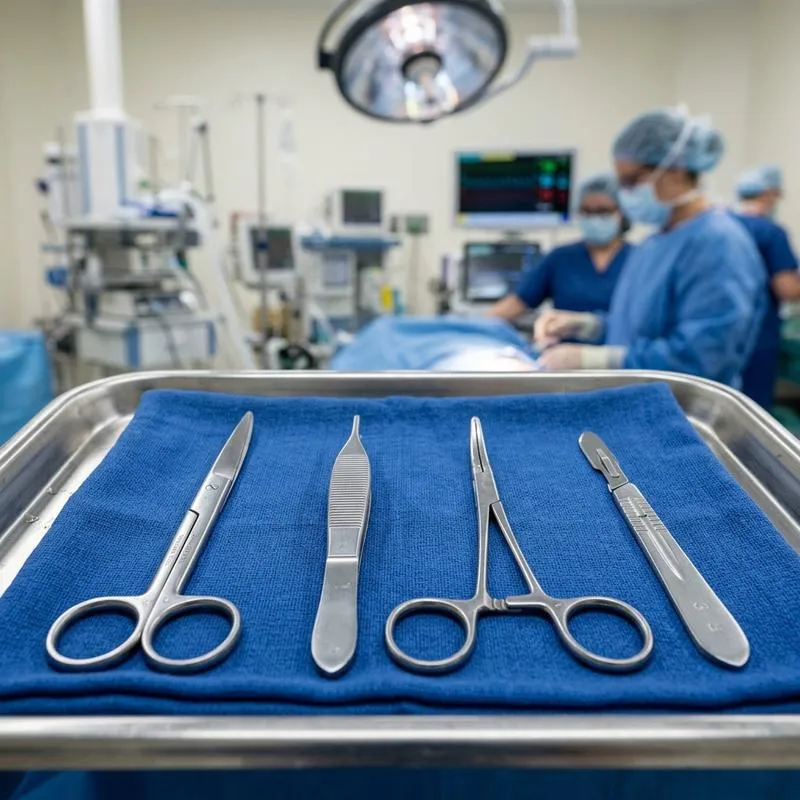
Surgical Site Infections (SSIs) aur Hospital-Acquired Infections (HAIs) kisi bhi healthcare facility ke clinical reputation aur patient safety ke liye sabse bada risk hote hain. Operation Theater (OT) mein use hone wale surgical scissors, forceps, retractor sets, laparoscopic trocars, aur orthopedic power tools ki sterility 100% uncompromising honi chahiye.
Sterilization sirf ek machine cycle nahi hai, balki ek disciplined Central Sterile Services Department (CSSD) closed-loop protocol hai. Is 2026 comprehensive operational guide mein hum hospital surgical instrument sterilization best practices, Class B autoclave price benchmarks in India, ultrasonic decontamination workflows, aur NABH/EN 13060 validation protocols ko step-by-step detail karenge.
1 CSSD 3-Zone Layout & Unidirectional Workflow (NABH Mandatory)
NABH accreditation standards ke mutabiq cross-contamination ko 0% karne ke liye hospital CSSD unit ko mandatory 3 distinct zones mein segregate kiya jana chahiye with unidirectional workflow (Dirty → Clean → Sterile):
Decontamination / Soiled Zone
Negative pressure ventilation room. Post-operative soiled instruments yahan receive hote hain. Immediate enzymatic pre-soak, manual scrubbing with soft nylon brushes, aur ultrasonic cleaner cavitation processing isi zone mein hoti hai.
Inspection, Assembly & Packaging
Positive pressure room with HEPA air filtration. Clean dried instruments ki optical magnification inspection, box-lock silicone lubrication, tray assembling, aur medical-grade SMS non-woven wrap ya Tyvek pouches mein heat sealing.
Sterilization & Sterile Storage
Positive pressure, humidity-controlled (40-60%), cleanroom environment (temp 18-22°C). Pass-through autoclaves load/unload area. Sterile packs are stored on stainless steel wire shelves >25 cm off the floor until dispatched to OT suites.
2 Autoclave Classes Compared: Why Class B is Mandatory for Surgical OT
European Standard EN 13060 aur BIS IS 3829 steam sterilizers ko 3 functional classes mein categorize karte hain:
| Autoclave Class | Air Removal Mechanism | Compatible Load Types | Suitability for Surgical OT |
|---|---|---|---|
| Class B (Fractionated Vacuum) | Powerful mechanical vacuum pump (3-pulse fractionated pre-vacuum) extracts 99.9% air from chamber before steam injection. | All Load Types: Hollow instruments (laparoscopic trocars, suction cannulas), porous textiles/drapes, and wrapped double-layer trays. | Mandatory Gold Standard (NABH & EN 13060) |
| Class S (Specific Cycle) | Single-stage vacuum or repetitive positive pressure pulses. | Specific instrument categories tested and validated by manufacturer (simple hollow or single-layer wrapped). | Limited / Secondary Daycare Clinics |
| Class N (Gravity Displacement) | Gravity displacement (steam pushes air downward without vacuum pump). Air pockets remain inside lumens. | Only solid, unwrapped, non-porous instruments without hollow channels. | Unsuitable for Surgical OT (High SSI Risk) |
Planning Medical Equipment Procurement or Clinic Setup?
Browse SMD Medicare's verified B2B wholesale catalog of capital hospital equipment, diagnostic analyzers, and patient care supplies.
3 Hospital Autoclave & CSSD Equipment Price Matrix in India (2026)
| Sterilization Equipment Type | Capacity & Chamber Specs | Cycle Specs & Automation | Est. Price Range (₹ INR)* |
|---|---|---|---|
| Tabletop Class B Pre-Vacuum Autoclave | 18 Liters - 23 Liters (SS 304/316) | Microprocessor controlled, built-in thermal printer, Bowie-Dick cycle | ₹1,20,000 – ₹2,40,000 |
| Hospital Horizontal Cylindrical Sterilizer | 100 Liters - 300 Liters (Radial Locking Door) | Steam jacketed, automated water feeding, digital PLC control panel | ₹2,80,000 – ₹6,50,000 |
| Double-Door Pass-Through CSSD Autoclave | 400 Liters - 1,200 Liters (Rectangular Chamber) | Pneumatic sliding doors, dual PLC touchscreen, clean steam generator | ₹6,50,000 – ₹16,00,000 |
| Hospital Ultrasonic Instrument Cleaner | 10 Liters - 30 Liters with Heating | 40 kHz ultrasonic transducers, degas mode, digital timer & heater | ₹45,000 – ₹1,25,000 |
| Low-Temperature Hydrogen Peroxide Plasma Sterilizer | 50 Liters - 120 Liters (for Heat-Sensitive Optics) | H2O2 vapor plasma cycle (45-55°C), zero toxic residue, 45-min cycle | ₹8,50,000 – ₹22,00,000 |
4 Step-by-Step Surgical Instrument Maintenance Protocol
Step 1: Point-of-Use Pre-Treatment
OT procedure complete hote hi instruments par blood, saline, aur bodily fluids dry hone se bachane ke liye multi-enzymatic foam spray apply karein. Saline immersion strictly avoid karein kyunki chloride ions surgical grade stainless steel (AISI 410/420) mein pitting corrosion create karte hain.
Step 2: Ultrasonic Cavitation Decontamination
Hinged instruments ko open position mein ultrasonic cleaner basket mein arrange karein. 40 kHz frequency micro-bubbles bio-burden ko inaccessible joints aur serrations se dislodge karti hai (recommended cycle: 10–15 mins at 45°C with neutral pH enzymatic detergent).
Step 3: Demineralized Water Rinsing & Lubrication
Instruments ko RO/DM water se thoroughly rinse karein. Tap water mein present dissolved salts (silica, calcium) autoclave steam heat mein stains aur scaling generate karte hain. Box locks aur sliding joints par steam-permeable, oil-free medical silicone lubricant apply karein.
Step 4: Packaging & Chemical Indicator Placement
Trays ko medical-grade SMS wrap ya peelable pouches mein pack karein. Har pack ke centre mein Class 5 / Class 6 chemical integrating indicator place karein jo steam, temperature, aur time teeno critical parameters ko verify karta hai.
Step 5: Validated Class B Sterilization Cycle
Select either 134°C for 3.5 to 5 minutes at 2.1 bar (for wrapped surgical instruments) or 121°C for 15 to 20 minutes at 1.1 bar (for rubber/silicone parts). Ensure complete post-vacuum drying cycle so packs emerge 100% bone-dry.
5 NABH Validation: Physical, Chemical & Biological Indicators
- Daily Bowie-Dick Test: Har subah first cycle se pehle Class B autoclave ka Bowie-Dick air removal and steam penetration test sheet run karna mandatory hai.
- Class 5/6 Integrating Indicators: Every surgical instrument pack must include a multi-parameter indicator confirming that 134°C steam exposure was sustained for the required lethal time.
- Weekly Biological Indicators (BI): Geobacillus stearothermophilus bacterial spore ampoules (10^6 population) must be processed weekly and with every implant load. Incubation results (24-48h or 20-min rapid readout) must be archived in the CSSD permanent logbook.
6 Frequently Asked Questions (FAQs): Sterilization Protocols
Q1. Why is a Class B autoclave recommended over Class N for surgical instruments?
Class N autoclaves rely on passive gravity air displacement, leaving residual air pockets inside hollow trocars, laparoscopic tubes, and wrapped surgical trays that block steam from reaching microbial spores. Class B autoclaves utilize an active fractionated vacuum pump to remove 99.9% of air, guaranteeing 100% steam penetration.
Q2. What water quality must be used in medical autoclaves?
Only Reverse Osmosis (RO) or Demineralized (DM) water with electrical conductivity below 15 µS/cm must be used. Regular tap water contains dissolved minerals that cause boiler scaling, heating element burnout, and brown mineral staining on surgical steel.
Q3. What is the shelf life of a sterilized surgical pack?
Under event-related shelf-life principles, packs stored in positive-pressure, climate-controlled CSSD rooms remain sterile for up to 30 days in double-layer SMS wraps, and up to 6 months in heat-sealed medical paper-plastic pouches, provided the wrapper remains intact, dry, and undamaged.
Q4. Can surgical scissors and sharp cutting instruments be sterilized in an autoclave?
Yes, high-grade surgical stainless steel (such as 420 martensitic steel) can withstand repeated steam cycles. However, blades must never touch other metal tools during the cycle, and tips should be protected with steam-permeable silicone guards to prevent blunting.
Q5. How often must biological indicator testing be performed for NABH?
NABH guidelines recommend testing steam autoclaves with Geobacillus stearothermophilus biological indicators at least once a week, and unconditionally inside every load containing implantable orthopedic or spinal hardware.
Equipping Your Operation Theater or CSSD Facility?
SMD Medicare is an authorized B2B wholesale distributor supplying hospitals and surgical centers across India with genuine Class B autoclaves, ultrasonic cleaners, and critical OT care equipment at direct ex-factory rates.
Planning Hospital Equipment Procurement or Clinic Setup?
Speak with SMD Medicare's certified biomedical consultants for official wholesale price lists, equipment comparisons, and turnkey hospital packages.
Written by Sanjay Verma, Senior Sterilization Technician
Published by SMD MEDICARE Hospital Equipment Division. Providing verified technical specifications, hospital procurement benchmarks, and wholesale equipment guides across India.